Preserving Vintage Video Game Print Advertisements
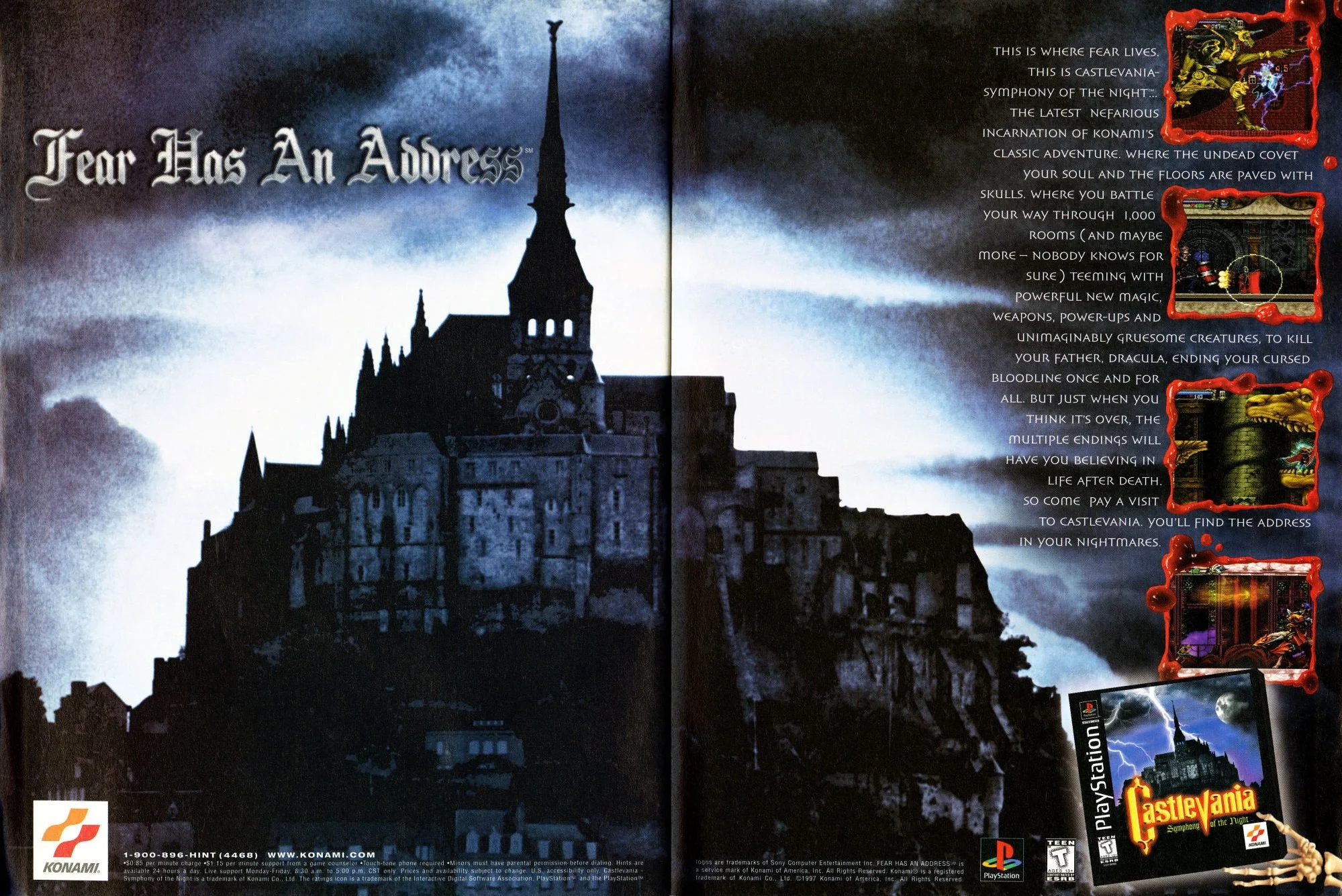
Outside of my local library, I spied a stack of vintage comic books on the “FREE” cart. As I flipped through them, I caught a two-page centerpiece ad for Castlevania: Symphony of the Night for the Sony PlayStation. Similar ads littered the pages. The comics, all from the late 90’s, held precious gems between their illustrated explosions and neon heroics: vintage video game ads from my peak memory formation era. Titles like Metal Gear Solid, Silent Hill 2, and Tekken 3 illuminated this niche corner of cultural ephemera.
After some quick research, I discovered a small, obscure market for vintage video game print advertisements. I also discovered some simple methods for extracting the ads with minimal damage. I’ll share a bit more about this unique lane of digital cultural preservation and why I think it matters.
Print Challenges
Print is a challenging medium for video games. Presenting rich digital worlds as exciting proved a substantial challenge for publishers of the era. Even juggernauts like Konami and Square struggled to balance mass appeal with underground edge. Compared to the far more advanced film technology of the late 1990’s, video game promotional campaigns fell flat and lifeless on the page.
These troubles, further hindered by the bland presentation of still-image 3D graphics printed on paper, made this era and format a special phenomenon in design and advertising. How do you show enough to entice a new player without activating the cringe impulse? How do you compete with others in the industry while promising something new?
A journey through vintage gaming ads shows how different companies and publishers varied their approaches to this central tension. Some went full zany. Many courted pure edge. Others pursued a “less is more” philosophy by never revealing the true imagery of their games.
One such example is a Crash Bandicoot ad campaign from Sony, where a live model wore a fur suit on location for several distinct photo shoots. Despite the cutting-edge 32-bit console of the day, the publisher still opted for a visual compromise. Instead of detailed 3D PlayStation textures rendered to print, they thought a live model in a silly suit sold their game better.
Square’s Final Fantasy VII was groundbreaking. Its ad campaign stands out as part of the reason for its rise. Originally planned to release on the Nintendo 64, Square’s graphical ambitions sent them to Sony, where they utilized the new disc format of the PlayStation. Discs offered storage capacities far greater than those of the cartridge era.
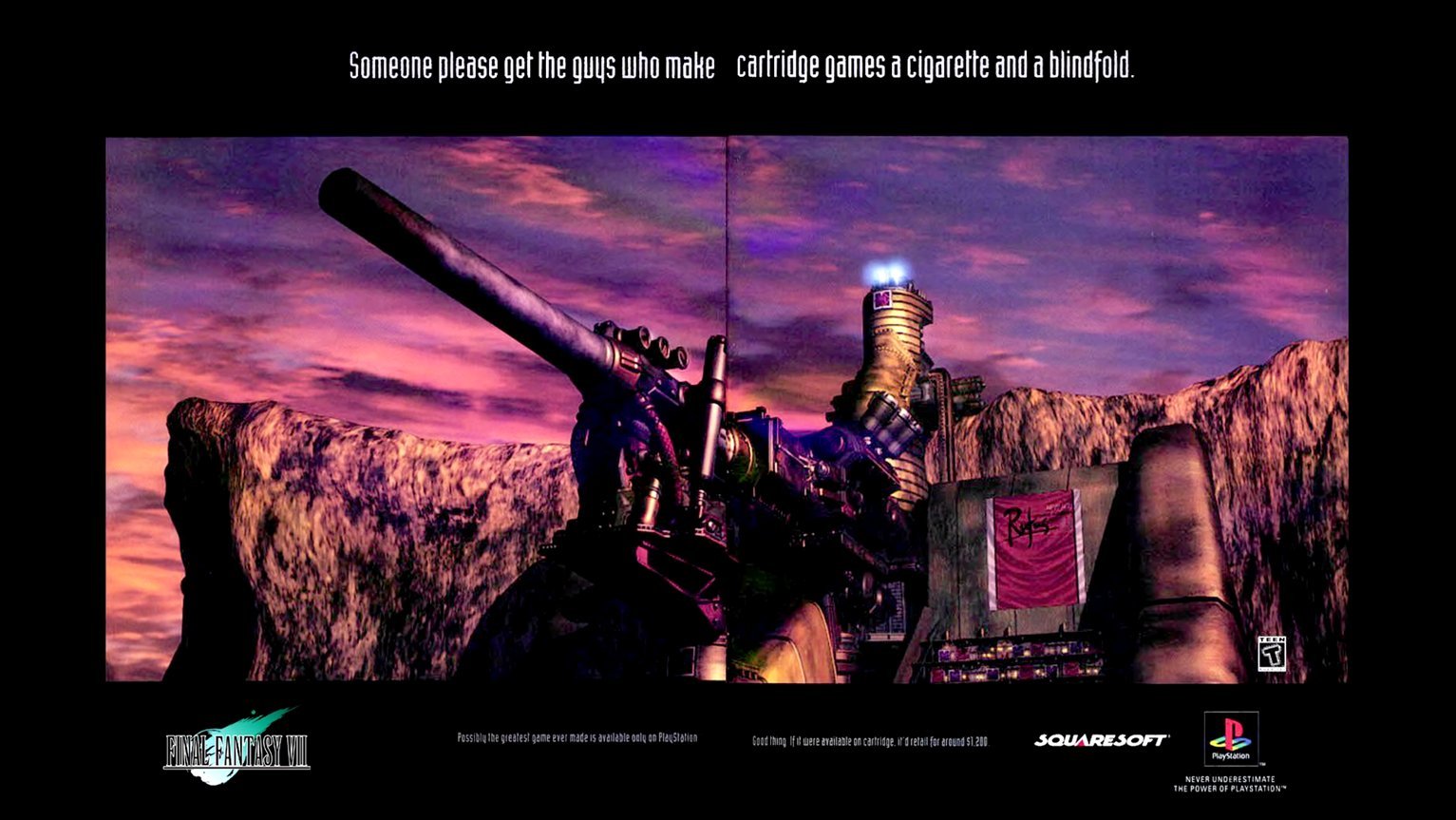
With expanded memory, this meant the game’s playable environments could not only store more assets, but the nascent cinematic angle of video games as a medium could now shine through gorgeous pre-rendered cutscenes. These cutscenes, commonly referred to as Full Motion Videos or FMVs, allowed developers to create lush, filmic scenes far more visually stunning than the blocky reality of pixelated gameplay graphics. Square used this advantage in their marketing sprint, showcasing these high-fidelity pre-rendered scenes rather than revealing the clunky look of the gameplay in its television commercials.
This same principle surfaced in print, as the new technology of the PlayStation solved many problems both in memory and marketing. Screenshots of pre-rendered 3D cutscenes made printed ads in magazines and comic books appear far more futuristic than the reality of the gameplay. The print ads for Final Fantasy VII lean heavily into the technical chest-puffery of the new title, a surprising fact considering the legacy the game now has as a deep, story-driven journey of love, autonomy, and universal human flaws.
Safe Extraction Methods
There are a few main categories of print ads in comic books (for these examples I’m ignoring traditional print magazines and focusing on comics)
Single-page cover/back (glossy)
Single-page insert (stock)
Centerpiece insert (stock)
Centerpiece insert (glossy)
Multi-page insert (stock/glossy)

Flip through the comic to find the center staple point. This is often at or near the middle of the book.
Use a flat box cutter/blade to pry the staples from the center binding. Once they’re popped up, you can flip the book over to the spine. Using the edge of the blade, find the loosest part of the staple and begin to pry it out. Once loose, the rest of the staple should slide out with minimal resistance. When removing the inner fold of the staples, be mindful of the blade’s position on the page, as even minor pressure can create unwanted impressions on the print.
With staples removed, you can narrow down your method depending on the layout and the desired outcome. If preserving for quality and posterity alone, for example, avoid removing the pages from the glued section of the book, as this can add additional tear marks and unnecessary perforations.
The Fall of Fun (Or The Rise of Sanitized Presentation)
Vintage gaming ads are fun. They’re also offensive. They lack the kind of sanitized presentation common in today’s entertainment marketing sphere. In these vintage ads, there is no whiff of agenda, no sense of committee approval, and minimal red tape. They’re often full of edgy copy that could never run today. Images are often suggestive and crude, while still sliding in under the censor’s battalion. These factors aren’t worthy of praise alone; they merely highlight the importance of cultural progression and how something that seems completely passable in one era can become a faux pas in a matter of decades.